Dimensions


July, 2026
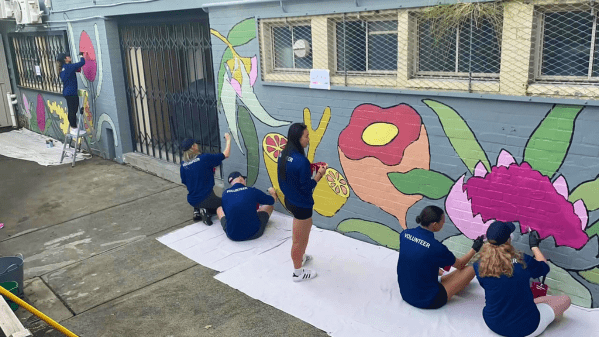
Amazing things happen when you go out into the world to do good. A dull grey wall comes alive with exuberant bursts of colour, spreading sunshine and happiness to all who pass by. Barren earth is made fertile, with newly planted gardens promising growth, renewal and future abundance.
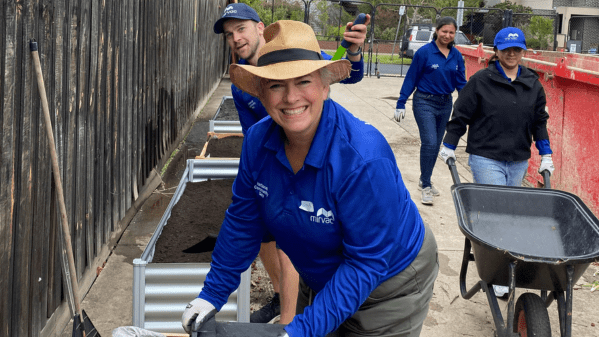
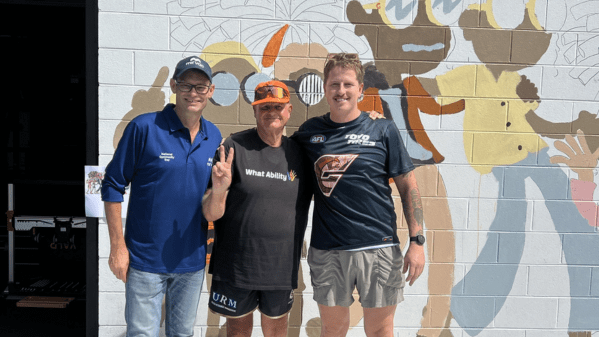
From murals and gardening, to donating blood, knitting quilts and preparing meals, the 950 employees who participated in Mirvac’s National Community Day made a difference. To be a force for good you have to do good and each year Mirvac puts its corporate philosophy into action, going out into the community to give help where it’s needed.
In 2025 Mirvac employees took part in more than 90 volunteering activities, providing more than 6,100 meals, supporting eight schools, planting 25 gardens, and applying 318 litres of paint to beautify and transform spaces. While we pride ourselves on designing and building beautiful homes and workplaces as our core business, we also aspire to leave a positive legacy – for employees, shareholders, investors, consumers and communities alike.
“Operating in a socially responsible manner is becoming increasingly important, not only from a moral standpoint but also from a business perspective,” says Mirvac CEO and Managing Director Campbell Hanan. “Our responsibility goes beyond buildings. It’s about caring for our people, fostering inclusion, and contributing positively to the communities where we operate.
“We set a goal to spend $100 million on social procurement by 2030, and achieved that five years early, in December 2025.”
Being a force for good is embedded in the way we do business and over the years Mirvac has designed and implemented a number of social initiatives providing long-term support to charities and other organisations. At the same time we encourage employees to participate as much as they would like through unlimited paid leave for volunteering, building a sense of community within our projects and generally trying to improve the society in which we all operate.
The company is committed, for instance, to supporting diversity in Australia, and sponsors three annual scholarships for young LGBTQI+ Australians through The Pinnacle Foundation, to enable students to study in fields related to property and construction.
Engaging with First Nations peoples is also a priority. When Mirvac started working on the masterplanned community Henley Brook in Noongar Country, 20km from Perth, we were keen to involve the Traditional Custodians, the Whadjuk-Noongar people. One of many positive outcomes was that local students created artworks that have been integrated into the development. We also raised funds to send 133 microscope kits to remote and regional schools as part of the charity Deadly Science’s mission to improve STEM learning for Aboriginal and Torres Strait Islander children.
Building strong bonds within new Mirvac communities is another goal. In the past year Mirvac’s community investment was $13.3 million, money spent providing excellent infrastructure such as playgrounds, parks and other green spaces, as well as programs to bring people together.
At the Olivine masterplanned community in Donnybrook, in Melbourne’s northern growth corridor, a forum has been set up where everyone can share information and receive council services, for instance, from a child health nurse. At NINE by Mirvac in Willoughby, Sydney, a series of initiatives, from gardening to author talks and pickle ball competitions have helped to build community.
“Creating social infrastructure in our projects is important to us,” says Ms Clarke. “When new communities are being built, it’s a great chance for people to get to know each other and feel safe with a sense of belonging. Investing in communities so that they become socially cohesive is a top priority for us.”
Using our procurement strength, Mirvac is able to spread the benefits of development to a wider audience by partnering with social enterprises. There are more than 30 social enterprises within Mirvac’s supply chain, including for purpose organisations that employ refugees or people with disabilities.
Where we see groups doing valuable work, we will lend our resources to help mentor and grow their reach. We are leveraging the diverse skillset across our business to help grow the social enterprise sector, getting them ready to become a supplier to larger businesses such as Mirvac. Some of these include Green Connect and CommUnity Construction which create jobs for refugees and others facing hurdles to employment, while another, Reground, collects and minimises waste and upcycles the benefits for the environment.
“We’re a large business and we spend a lot, so when we choose social enterprises and First Nations businesses, it can really change lives,” says Ms Clarke. “Our biggest impact comes from how we buy. We set a goal to spend $100 million on social procurement by 2030, and achieved that by the end of last year.
“That’s a huge amount, and the stories we hear about the difference it makes are incredible. The products we’ve bought have been just as good – sometimes even better – than what we’d get elsewhere. So, it’s been a win all round.
“All these programs help us deliver better outcomes for customers, employees and communities, and it’s amazing to see the difference we can make.”
“Our responsibility goes beyond buildings. It’s about caring for our people, fostering inclusion, and contributing positively to the communities where we operate.”
Mirvac offers unlimited fully paid volunteer leave allowing staff to support causes and charities close to their heart. These are their stories.
Directing help where it's needed
STUART PINKLIS
CEO Development Residential & Commercial and Mixed Use
When Mirvac founder Bob Hamilton retired from the company in 2005, he became closely involved in helping The Salvation Army. When he finally stepped down from that role in 2020, he handed it on to Stuart Penklis.
Mr Penklis was honoured; he’d been doing some work for them in the decade prior and saw it as a fabulous fit with Mirvac. “We are acutely aware that while we fulfil an important role in delivering new housing not everybody in the wider community has the security of a roof over their head,” said Mr Penklis.
“But it’s important, when you create new neighbourhoods to lean into some of the challenges, and The Salvation Army, with its central philosophy of always having the door open, is something that resonates with me. The Salvos are very focused on helping people, particularly when it comes to shelter and support, and Mirvac is very aligned with that culture.”
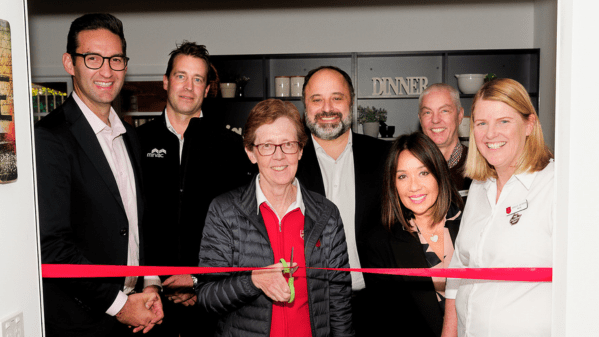
When opportunities come up to help with the charity’s work, Mirvac is quick to seize them. A number of employees work on Salvo sites on Mirvac Community Days and often project teams will partner with the Salvos to do something extra for the local community.
Mirvac teams working on The Albertine apartments in Melbourne’s Albert Park undertook a refurbishment of the Salvos’ drop-in centre, The Well at St Kilda Chapel. While delivering Smiths Lane in the city’s Clyde North, employees, suppliers and subcontractors all came together to design and build a house that was later auctioned off for $600,000, helping the Salvos deliver even more accommodation for people experiencing homelessness.
“The Salvos are great people and I’m constantly amazed by what a huge difference they make,” says Mr Penklis, who sits on The Salvation Army property board. “They fill a massive gap in society, and I’ve been so inspired by them. Supporting the Salvation Army has been one of my most significant personal achievements.”
A personal crusade for a cure
NATASHA RYKO
National Marketing Director, Residential and Build To Rent
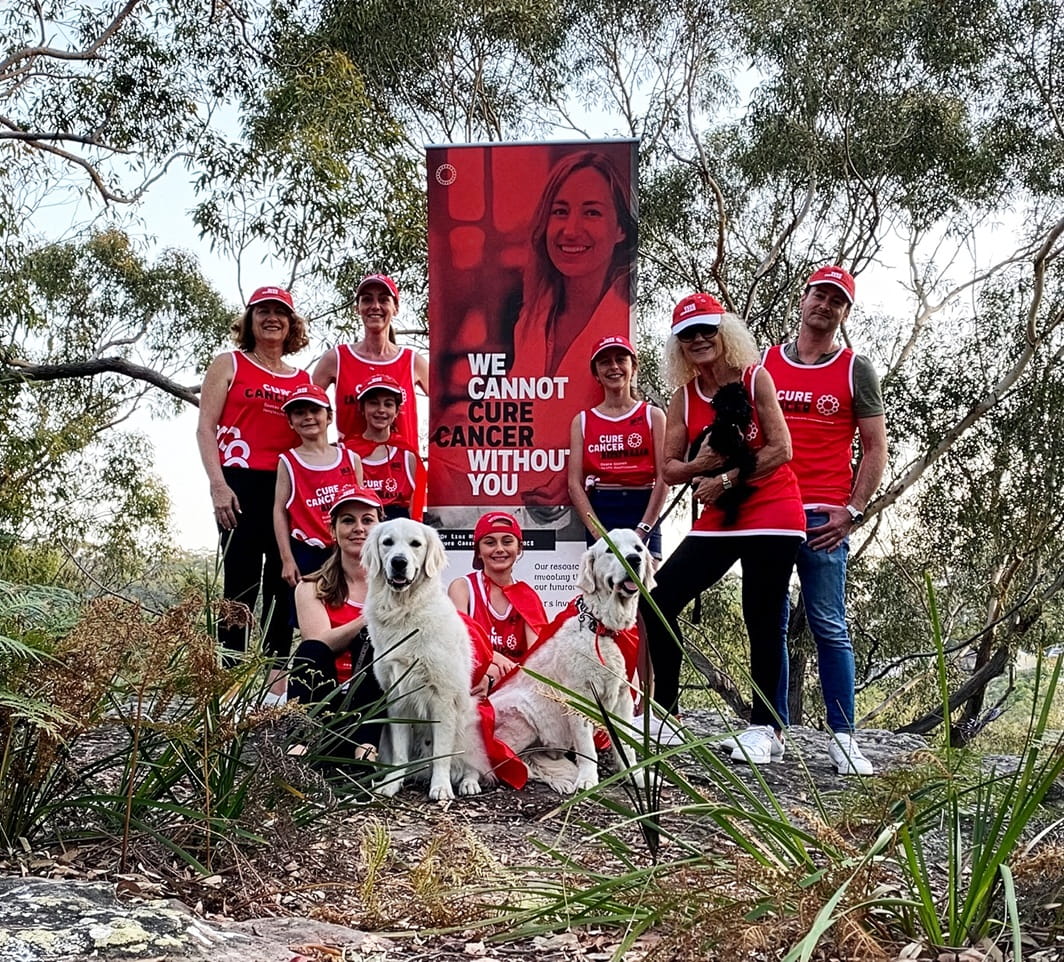
Natasha Ryko’s family has been involved with Cure Cancer Australia since its inception in 1967, raising money for research that might one day eradicate the disease or improve treatment outcomes. The family’s involvement began after a family member was diagnosed with Hodgkins Lymphoma. Like the rest of her extended family, Natasha was hands on in supporting the Foundation as it grew to become Cure Cancer Australia but saw that the charity was missing an opportunity to engage with supporters of her own age.
“I felt there was a generational divide, so with my sister Samantha and a few other children of committee members and supporters of CCA we established the Young Cure Cancer Australia Committee to encourage young people to get involved,” recalls Natasha. “We set out to show people in their 20s and 30s that charity events were not stuffy or boring and always made them a lot of fun.”
Tapping into Natasha’s expertise in marketing, they abandoned traditional formality to stage a series of biannual events that had an element of daring, creativity and surprise, black tie affairs where guests rode dodgem cars and down giant slippery dips. The fundraisers not only achieved the goals of raising money for cancer research and bringing a new generation of supporters into the fold, they also saved the life of one young supporter.
“A guest at one of our events visited his doctor afterwards and discovered that he had cancer,” says Natasha. “The early detection saved his life and reinforced the message we were trying to convey, that cancer is increasingly a young person’s disease.”
Natasha’s role at Cure Cancer has evolved but never wavered over the years. She has remained active as a volunteer and supporter of the organisation which has raised more than $78 million to fund early career cancer researchers Australia wide. Bringing Mirvac into the fold as a National Community Day partner gave staff the opportunity to volunteer at the charity and support a cause that touches so many lives. Every year, she says, 9.6 million people die from cancer worldwide; one Australian every 12 minutes.
The creative ideas keep coming and so too the medical breakthroughs – at last count more than 578 CCA grants have been given for research into the detection and treatment of a range of cancers. And now Natasha’s own children have got in on the act. Her eldest daughter, since the age of 10, has been asking friends to donate to Cure Cancer instead of buying her birthday gifts.
“I’m very proud of her,” she says. “And it’s lovely that it’s become even more of a family effort.”
Hands-on help to build homes
KATHY ARICI
National Sales Director, Residential
With more than 30 years’ experience in property development, project management and sales, Kathy Arici is the perfect fit for becoming a corporate adviser with the international housing not-for-profit, Habitat For Humanity.
The organisation partners with communities to build homes for vulnerable families around the world – a cause close to her heart.
“I was born in South Africa and have a lot of family over there, so I’m passionate about eliminating world poverty,” says Ms Arici. “As a company that develops property, Mirvac has a lot of synergy with what Habitat For Humanity does, so it’s great to be a representative of the group on the supervisory committee and to be able to give back.”
And she isn’t averse to getting her hands dirty in the task of providing more housing, either. Ms Arici volunteered to go to Nepal to help build houses, raising funds for the project first, and persuading a group of friends to join her on her mission.
“It was an amazing experience,” she says. “We did a trek for three days, then had a couple of nights in Kathmandu, and then flew to the city of Biratnagar, and travelled by bus to the project in the kind of place you’d never see otherwise in your life. There, we did mostly labouring work.
“The houses had just two rooms and the bamboo walls were already up with a metal roof, and we were putting on render inside and outside. It was dusty, dirty and very hot work and a lot harder than I thought it would be. But I loved it. I’ve always wanted to get in and physically help.”
The experience felt so worthwhile, it’s left Ms Arici with a longing to one day take part in another build. Maybe next time, she’d do something with Habitat for Humanity in Laos or Cambodia. The organisation also works with communities in Australia who need a helping hand, including survivors of domestic violence, fire and floods.
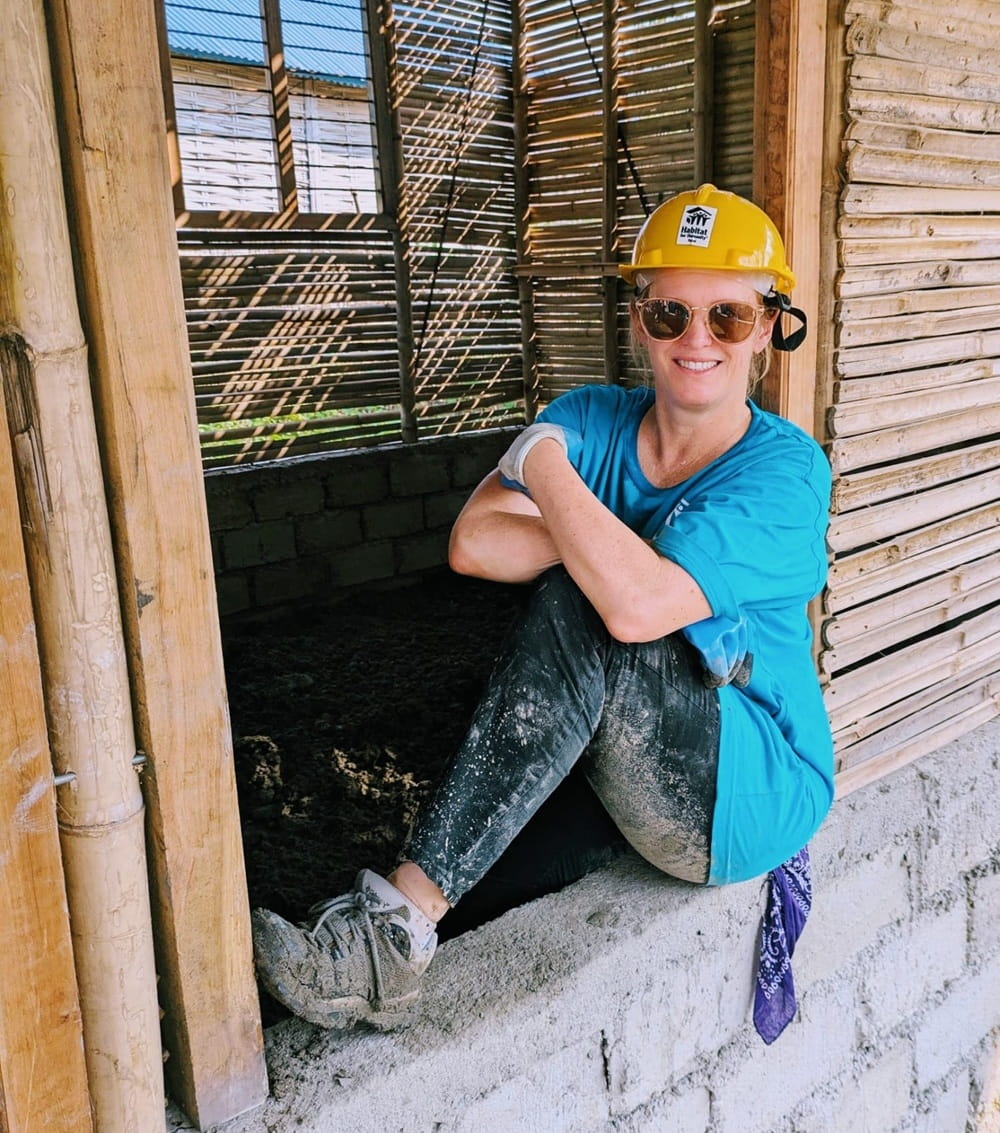
Kathy Arici found meaning supporting Habitat For Humanity
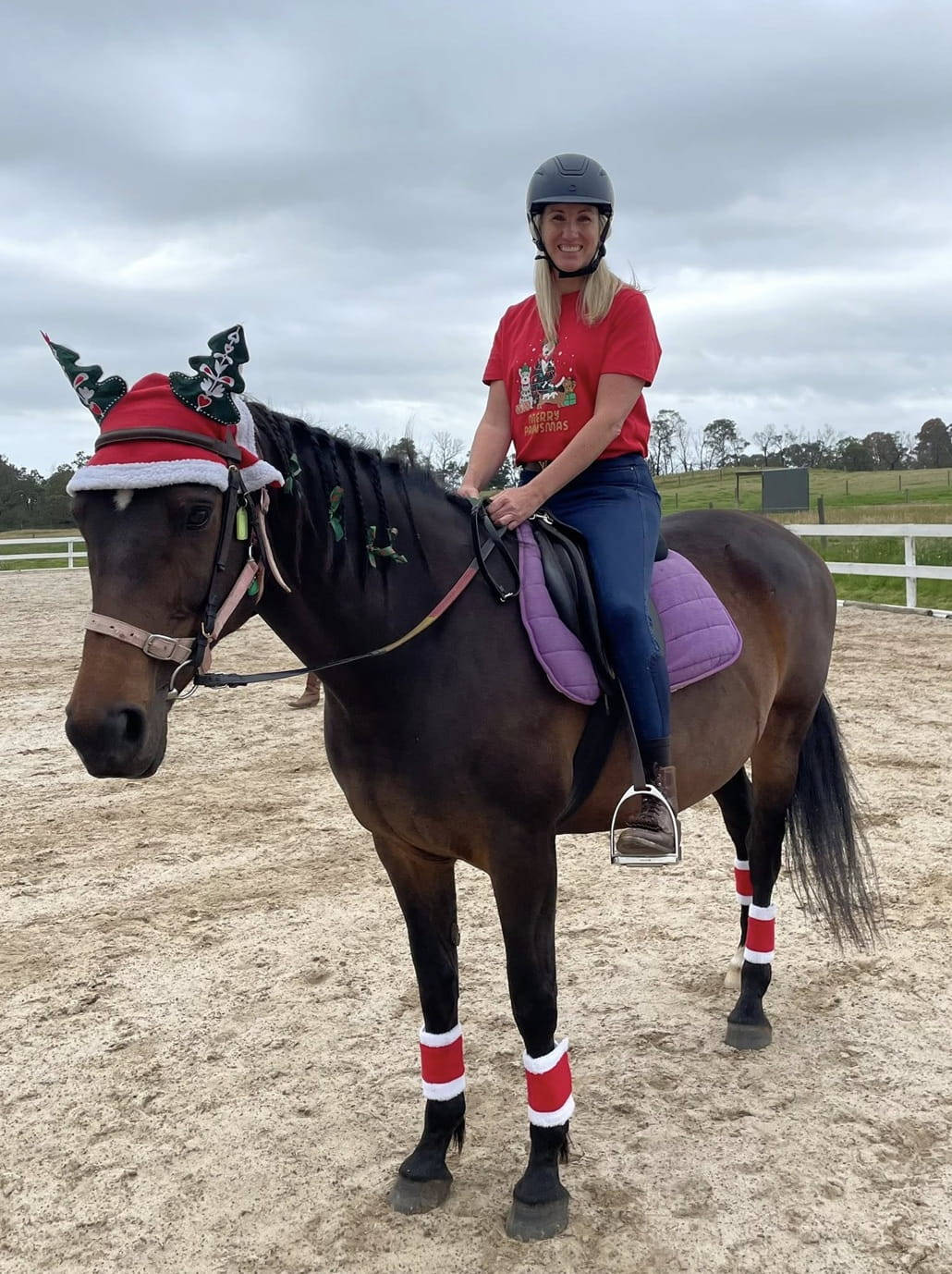
Soraya Taplin supporting Riding for the Disabled Pakenham
Riding high on the joy of giving
SORAYA TAPLIN
Senior Customer Relations Executive
There’s no mystery to why Soraya Taplin volunteers at Riding for the Disabled Pakenham. When a little girl whose hands are scrunched tight with Cerebral Palsy slowly unfurls her fingers to hold the reins of her pony or a young non-verbal boy laughs out loud as he bounces in his saddle, their joy is the gift that makes Soraya want to give and keep on giving.
“It’s so heartwarming to see them grow in the smallest ways,” says Soraya, a Senior Customer Relations Executive who works primarily with the Smiths Lane community at Clyde North.
“The feeling is one of overwhelming joy; you feel warm and happy and think my goodness, these horses have such a beautiful effect on these kids.
“We had a Christmas ride for everyone and one of the girls who had been coming for two years had never been able to canter. This time the horse went into a canter and she went with it and did an amazing job.
“Her grin said it all. It’s the little things that make the world of difference.”
Small victories like this, that can only happen if there are people willing to contribute, are at the heart of Mirvac’s staff volunteering program. Soraya is able to devote a few hours each week to Riding for the Disabled without it impacting her income, with the proviso that she stay on top of her workload and when there’s a conflict, work comes first. She knows the opportunity to give back through volunteering is a privilege rarely encountered in the workplace.
“I wanted to do something meaningful and purposeful; to help people. I think Mirvac is one of the most wonderful companies to allow their staff to go and do these things. I love working for them and being able to give back with the company’s support.”
There’s a common thread that runs from Soraya’s role assisting Mirvac customers through their settlement journey and her urge to help others. For several years she walked dogs for the elderly in her neighbourhood and volunteered at Collingwood Children’s Farm. But always there was a sense of wanting to do more. Riding for the Disabled enabled her to combine her love of horses with a program in which they work with the same group of children, helping them to build confidence and skills over time.
“We see them grow every week; it is just beautiful and fills you with such pride in what they achieve,” says Soraya. “Once you do it there is no going back because it brings you so much joy.”
The gains are not Soraya’s alone. By allowing Soraya to fully experience the gift of giving, Mirvac has one of its most devoted and loyal employees.
Determined to give back
MICHELLE AZIZ
Sustainability Analyst
Fate can have a cruel sense of irony. Michelle Aziz was always the first person to organise Cancer Council Daffodil Day fundraisers or Gold Coin donation days. She knew nobody with cancer but thought it was the worst thing that could happen to anyone. And then it happened to her. Not just any cancer but triple negative breast cancer, an aggressive subtype that doesn’t respond to hormonal therapies, making treatment more challenging and increasing recurrence risk in the first 3–5 years, though long-term outcomes improve significantly after that period. Though Michelle, a Sustainability Analyst with Mirvac based in Queensland, never dwelled upon the unfairness, the irony was not lost on her.
“Isn’t it ironic that I have always volunteered to this cause?” she says with a wry laugh that bears no hint of humour. “That juxtaposition of being the person who always organised everything to being the one who needed the help was quite jarring.”
After the tears had flowed and a punishing year of chemotherapy, surgery, radiation and immunotherapy, Michelle reverted to type. Counselling through her local cancer support group helped Michelle come to terms with the diagnosis and she felt driven to also make a contribution.
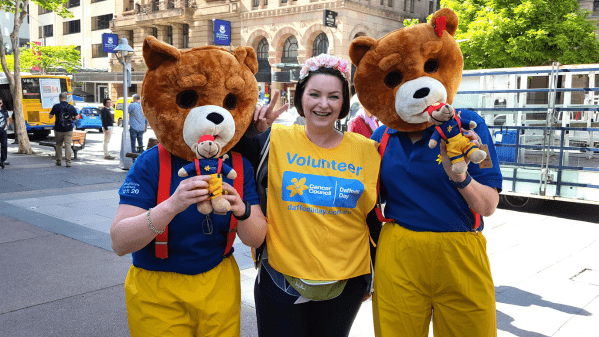
“I started volunteering while I was still getting treatment,” recalls Michelle. “I would help out at the cancer support group every Friday and also have immunotherapy treatment. Of course I didn’t last long with that; I exhausted myself and had to pull back.”
But Michelle’s determination to give back was as much for herself as for the women she wanted to support. When she learned about the Cancer Council’s peer support program, Cancer Connect, she realised it offered a way to volunteer that would not compromise her recovery or wellbeing. The peer support volunteer program connects people affected by cancer with trained volunteers who offer emotional support, guidance, and understanding based on lived experience. Drawing on the strength of her own experience, Michelle joined the program and completed the necessary training and workshops before starting her mentoring role.
“When I finished treatment, I realised how deeply I wanted - and needed - to support others. That’s what led me to become a volunteer with the Cancer Council,” says Michelle.
“It is actually healing me. By giving back I feel that I can make sense of this. I have gone through it and now I am using the experience to help other women.
“This is the first time I have been in this position where women come to me for help and knowledge and experience. I feel this is an important thing for me to do; what I should be doing. It is hard but if I can help them, it is all worth it. That is how I reconcile it in my mind.”
Michelle was assigned three women to support; all diagnosed with triple negative breast cancer. Because she has walked the same path, she’s uniquely equipped to offer understanding and support.
“The first hit comes when you learn you have breast cancer and then to discover that it is aggressive, it is hit after hit after hit. Each of the women has a different story but the thread that connects us all is that they are terrified and don’t know what is going to happen.”
Mirvac had given Michelle unlimited volunteer leave when she first requested Fridays to help at the cancer support group, a generosity that acknowledged the importance of giving back, and this support continued seamlessly as she moved on to peer support mentoring.
“The support I’ve received from Mirvac means a great deal. It reassures me that I can show up for these women and balance volunteering with my professional responsibilities.”
Michelle admits that cancer has changed her. She has learned to set boundaries, reordered her priorities and no longer plans too far into the future. She’s also writing a memoir, titled The Year My Boobs Tried To Kill Me, another tool for healing that she hopes will help other women fighting their cancer battle.
“I am going to focus my energy on helping people who need it,” says Michelle. “I am just learning that all the little things I used to worry about don’t mean anything anymore, and that what truly matters is supporting others and leaving a positive mark on their lives.”
“I’ve always been driven to help others - that’s what keeps me going. However long my time may be, I want to spend it knowing I’ve made a meaningful impact and contributed to something larger than myself.”
You might also be interested in